


Cat Not Eating but Very Lively_Appetite Abnormality Decoded
Cats exhibiting a situation where they do not eat but remain lively is by no means a signal to be taken lightly. On the contrary, it often indicates the need for immediate vigilance and prompt professional veterinary diagnosis because the cat may be attempting to conceal certain underlying health problems.
Before exploring this seemingly contradictory phenomenon, we first need to talk about the characteristics of cats as creatures. They are natural hunters, and an important part of their survival strategy is to hide their vulnerability. In the wild, showing weakness or discomfort is almost equivalent to signaling predators or competitors "I am an easy target." This instinct engraved in their genes has not diminished even in the comfort of a home environment. Therefore, a sick cat often instinctively tries to maintain a normal appearance, such as staying clean, maintaining a certain level of alertness, and even in the early stages, trying to appear lively as usual to avoid attracting the attention of “enemies” — even if the “enemy” is just you worrying about it.
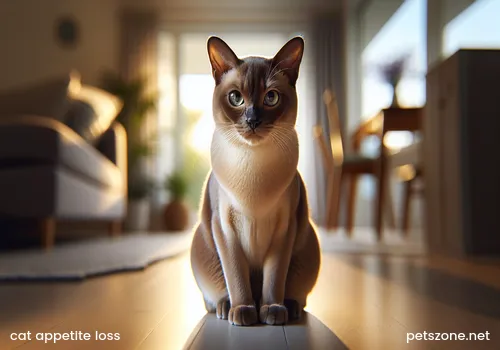
So, why is it particularly noteworthy when a cat is not eating but still appears lively? Loss of appetite (anorexia) is one of the most common nonspecific symptoms in feline diseases and may indicate a variety of underlying problems. Meanwhile, the “lively” behavior adds complexity to the diagnostic process but also provides some clues. Below, we peel back several layers of this phenomenon:
First, rule out illusion: Is it really "lively"?
Sometimes, the observed “lively” behavior may not truly represent full health. It could be a sign of restlessness or irritability. For example, decreased appetite might be caused by pain (oral pain, abdominal pain), and pain can make cats restless, pacing, or emitting low sounds, which owners might misinterpret as “lively” or “energetic.” Also, some diseases disturb normal feline behavior, causing abnormal hyperactivity or agitation. Therefore, carefully distinguishing the cat’s behavior is key—is it happily playing and chasing as usual, or does it seem a bit restless, anxious, or even aggressive?
Second, underlying medical possibilities: Why does the cat appear energetic despite physical discomfort?
Although many diseases are accompanied by lethargy and weakness, some conditions indeed exist where a cat’s appetite drops in early stages without affecting—or even temporarily increasing—their activity level:
- Oral and dental problems: This is a very common but easily overlooked cause. Gingivitis, periodontal disease, broken teeth, oral ulcers, or even foreign bodies or tumors in the oropharyngeal area can cause severe pain when eating. They may be hungry and want to eat, but touching food causes pain, so they choose to give up. However, this pain might not affect their normal activities when not eating, such as running, jumping, or playing. A cat that refuses food due to dental pain but still energetically chases a teaser toy is a typical depiction of this scenario.
- Early systemic diseases: Certain diseases may manifest only as loss of appetite in the early stages, while the body has not yet experienced general weakness.
- Kidney disease: While late-stage kidney disease is often accompanied by lethargy, in the early stages, a cat may reduce food intake slightly due to toxin buildup causing mild nausea but still maintain some activity.
- Hyperthyroidism: A common disease in older cats causing abnormal metabolic acceleration. Typical symptoms are increased appetite with weight loss, accompanied by hyperactivity, irritability, and sometimes increased aggression. However, at certain stages of the disease, especially with complications or complex conditions, cats may experience appetite fluctuations or decreases but still appear very lively or even hyperactive due to high thyroid hormone levels.
- Inflammatory bowel disease (IBD): This chronic condition causes gastrointestinal inflammation affecting digestion and absorption, leading to discomfort and nausea, which results in loss of appetite. IBD symptoms vary; some cats may merely show poor appetite while other aspects of mental state are temporarily unaffected.
- Pancreatitis: A painful disease usually leading to complete appetite loss, vomiting, and lethargy. However, some cats may exhibit atypical pancreatitis signs, where the pain is less obvious or presented in a way that does not significantly impact overall activity, causing loss of appetite without marked weakness.
- Pain: Broadly speaking, pain not limited to the mouth—such as mild joint pain, muscle strains—may indirectly affect appetite but not enough to deprive the cat of mobility. As noted, pain may also manifest as restlessness and irritability.
- Foreign body ingestion: If a cat swallows small objects like thread or bone fragments, these could obstruct or irritate the digestive tract causing nausea and loss of appetite. But if the obstruction isn’t complete, the cat may still move and play despite stomach discomfort.
- Certain toxin ingestion: Accidental ingestion of some plants, cleaning agents, or other toxic substances may initially cause nausea and appetite decrease. When the toxin has not fully affected the central nervous system or caused organ failure, the cat may still show some activity, even irritability.
Third, environmental and behavioral factors: Stress and picky eating
Although less likely than medical causes, these reasons for loss of appetite yet remaining lively cannot be entirely ruled out:
- Stress or anxiety: Cats are very sensitive animals. Environmental changes at home—moving, new family members, furniture rearrangement—changes in daily routines, or changes in the litter box or food bowl location or cleanliness can all cause stress. Some cats lose appetite under stress but may cope by over-grooming or increased activity, sometimes appearing “lively.”
- Dissatisfaction with food: Such as spoiled food, switching to a new brand that the cat dislikes, dirty food bowls, or an unsafe bowl location. In these cases, the cat refuses specific food but has no physical discomfort, so mental state and activity remain normal. However, prolonged refusal for days still poses a risk even for healthy cats.
The most important advice: Seek medical attention immediately, time is critical
As stated at the beginning, no matter how lively the cat appears, any complete anorexia lasting over 24 hours is an emergency for cats. Cats have a special liver metabolism: if they do not intake enough protein and energy in a short time (usually a few days, but varies individually), they are prone to hepatic lipidosis, commonly known as “fatty liver.” This is a severe liver disease that is difficult to treat once it happens and has a poor prognosis. Even seemingly mild loss of appetite can quickly develop into fatty liver.
Therefore, when you observe your cat not eating but still lively, the correct approach is:
- Immediately contact your veterinarian. Provide detailed descriptions of the cat’s condition, including how long it has not eaten, whether it refuses food completely, how much water it drinks, whether its mental state reflects genuine play or irritability, and if there are other symptoms (vomiting, diarrhea, abnormal urination, etc.).
- Do not wait and observe at home on your own. Especially do not assume “it’s fine because the cat is still lively.” As analyzed, this “liveliness” may be an illusion or merely early disease manifestation.
- Cooperate with veterinary examinations. The vet will perform a comprehensive physical examination, including checking the mouth and palpating the abdomen. Depending on the cat’s condition and the vet’s suspicion, further diagnostics may be needed, such as blood tests (to evaluate liver/kidney function, blood sugar, thyroid hormones, blood counts), urine tests, X-rays, or ultrasound (to check for foreign bodies, organ enlargement, inflammation, etc.). These exams are key to identifying the root cause.
Taking your cat to the vet is not only for treating illness but also to exclude invisible potential threats through professional methods, such as hidden pain under the gums or slowly developing internal organ diseases. Rather than anxiously guessing at home, it is better to let professionals diagnose.
Final remarks
A cat not eating but very lively is a typical case of a “silent patient” trying to maintain dignity, and may also signal some early disease. As responsible pet owners, we should not be fooled by their outward “strength” but should investigate deeply and seek professional help promptly. Remember, in cat health issues, being overly cautious rather than neglectful often saves lives. Timely veterinary intervention is the only right way to solve this “appetite abnormality” mystery.