

Cat Urinating Randomly_Solutions with Tips
Cats suddenly urinating outside the litter box to solve their personal problems is upsetting for any household. But don’t rush; this is usually not the cat deliberately causing trouble. Most likely, it is “speaking” to you in this way—telling you it is uncomfortable or has issues with the surrounding environment. The solution starts with being a “detective” to find the root cause and then treat accordingly. Simply put, the core approach is: first rule out physical problems, then analyze behavioral causes, and finally thoroughly clean and improve the environment.
Alright, we must admit, the complexity of cats urinating randomly sometimes rivals solving a behavioral economics puzzle. Many people initially think the cat is doing it on purpose and scold them harshly. What happens? Not only is it ineffective, but it may also increase the cat’s anxiety, making things worse. Remember, cats think very differently from humans; they do not urinate randomly out of revenge or “naughtiness.” This is almost always a sign of an unmet need or a bodily warning.

Step one: Always rule out health problems—take your “suspect cat” to the hospital
This cannot be emphasized enough. According to extensive veterinary clinical experience, a considerable portion of cats urinating outside the litter box is caused by urinary system diseases such as urinary tract infection (UTI), cystitis, urinary stones or crystals. These conditions cause the cat pain or discomfort during urination, and they might associate this pain with the litter box, seeking a “safer” or more comfortable place elsewise.
Imagine if every time you used the bathroom it felt like being stabbed, wouldn’t you want to find another spot? Cats think the same. Moreover, random urination can also indicate other health issues such as kidney disease, diabetes, hyperthyroidism, or even arthritis (if the litter box entrance is too high, elderly cats with limited mobility may avoid it).
Therefore, when you find your cat starting to urinate randomly, the first and most responsible thing to do is to take it to a vet. Clearly describe the symptoms: is the urine output more or less? Any pain during urination (such as crying, frequent litter box visits without urinating)? Any abnormal urine color? Does the cat urinate normally in the litter box as well as outside? The vet will perform urine tests, blood tests, and possibly imaging exams to determine if there is a health problem. Only after ruling out physiological causes can the focus shift to behavioral aspects.
Step two: Become Sherlock Holmes and deeply analyze behavioral roots
If the vet confirms the cat is physically healthy and eating well, then the problem lies in behavior or environment. This is often the most challenging part because you need to observe and analyze carefully. Behavioral reasons can mainly be divided into several categories:
A. Is the “feng shui” of the litter box bad?
This is probably the most common cause. Cats are particular about their litter box requirements. They have their own strict standards concerning their “cat respect” and toilet environment.
- Cleanliness: Cats are famously clean animals. If the litter box is too dirty, they will definitely “vote with their feet.” Imagine a public toilet that’s never flushed; would you want to enter? Cleaning feces and urine clumps at least once daily is mandatory, and thoroughly washing the litter box and replacing litter at least once a week is essential. Use neutral detergents and avoid harsh-smelling cleaners like bleach, as that is basically a “biochemical weapon” to cats.
- Type of litter: Cats have their preferences. Some like fine bentonite litter, some prefer wood pellets, and some hate scented litters. While scented litter may be refreshing to humans, it can be overwhelming to cats with sensitive noses. If you recently changed litter, your cat may reject it due to texture or smell. Try different unscented litters to see which your cat prefers.
- Number and location of litter boxes: A basic rule is “number of cats + 1” litter boxes. For example, if you have two cats, provide at least three litter boxes. Moreover, these should not be clustered in one place but dispersed in different areas of the home. Imagine if all toilets are in one room; it would be inconvenient during peak times. Cats may avoid the litter box due to competition or feeling uneasy. Litter boxes should be placed in quiet, private, food- and water-free areas, easily accessible at all times. Avoid placing next to washers, dryers (noise and vibration), or busy areas.
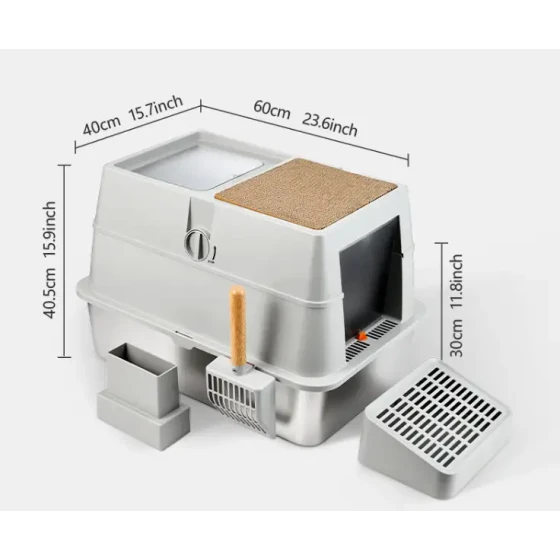
- Type and size of litter box: Some cats dislike covered litter boxes because they may feel cramped, poorly ventilated, or threatened inside. Young or larger cats may need bigger open litter boxes so they can easily enter, turn around, and dig. Elderly cats may need litter boxes with lower side entrances.
B. Is the environment very stressful?
Cats are highly sensitive animals; minor environmental changes can trigger stress reactions, and random urination is often one such manifestation.
- Changes in household members or pets: A new baby, a new roommate, a newly adopted pet, or even guests can make cats nervous. Relationships between multiple cats can be delicate; lower-ranking cats may urinate outside the litter box out of fear due to conflict or competition.
- Moving or furniture changes: Moving to a new home or significant rearranging of furniture can unsettle cats, making them feel their territory is “out of control.”
- External stimuli: A stray cat “patrolling” outside or a neighbor’s dog barking frequently can cause anxiety, leading cats to mark territory or seek security by urinating randomly.
C. Is this “marking” rather than “urinating”?
Although both are elimination behaviors, cat “marking” (spraying) differs from normal urination. Spraying usually serves to claim territory, especially common in unneutered cats, though neutered cats may do so when threatened or stressed. When spraying, cats typically stand with their tails erect and trembling slightly, spraying small amounts of urine on vertical surfaces (walls, furniture, etc.). Normal urination involves squatting with a larger volume on horizontal surfaces. If you notice spraying behavior, it involves territorial and stress issues and should be addressed by reducing stressors and increasing the cat’s sense of security. Neutering/spaying is one of the most effective ways to reduce marking behavior; if your cat is not altered, vets usually recommend this as the first step.
Step three: Better late than never—the key is thorough cleaning
Cats’ sense of smell is dozens to hundreds of times more sensitive than humans. If a place retains cat urine odor, even if you cannot smell it, it strongly signals to the cat: “This is my bathroom!” or “You can pee here!” Therefore, completely removing urine odor is critical to preventing repeat offenses.
Mere regular cleaners are insufficient because they only mask odors without breaking down enzymes and proteins in urine. You need a specialized enzymatic cleaner. This type of cleaner breaks down organic compounds in urine, thoroughly eliminating the odor so the cat no longer senses “temptation” or “its own mark.” When cleaning, be sure to identify all soiled areas (sometimes aided by UV light) and soak/clean thoroughly following product instructions.
Step four: Fundamental solution—environmental modification and behavior guidance
After finding the cause and thorough cleaning, the next step is to modify the environment and guide behavior to help the cat rebuild confidence and security.
- Improve litter box environment: Based on previous analysis, increase the number of litter boxes, disperse placements, change litter types, adjust box size and type, and ensure cleanliness.
- Reduce stress sources: Maintain a stable home environment and avoid sudden changes. If change is necessary (such as moving or new family members), prepare and introduce gradually. For new cats, isolate and slowly introduce them. For multi-cat family conflicts, seek help from a professional pet behaviorist if needed.
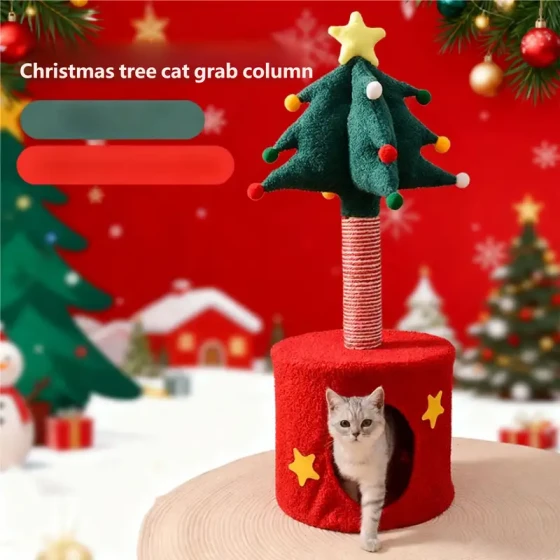
- Add vertical spaces and hiding spots: Cats like to observe from high places to feel safer. Provide cat trees, wall shelves, etc. Also provide enough hiding spots (cat beds, boxes) so cats have refuge when stressed.
- Diversify the cat’s attention: Place food, water bowls, toys, or scratching posts near areas where the cat previously urinated. Cats usually don’t urinate where they eat, drink, or play.
- Use pheromone products: Products like Feliway simulate cat facial pheromones by releasing “happy” signals from cat facial glands. This helps relieve cat stress and anxiety, making them feel more relaxed and secure. Such products are effective for stress-induced urination problems.
- Active interaction and play: Spend daily time playing and interacting with your cat to expend energy and reduce boredom and anxiety. Regular play also enhances the cat’s sense of security.
- If stress is severe, consider medication assistance: Under veterinary guidance, extremely anxious or stressed cats may require short-term anti-anxiety medication to cope while environmental and behavioral adjustments are underway. This must be prescribed and monitored by a vet.
Some additional thoughts:
- Never punish: As mentioned before, punishing a cat for urinating randomly is almost always ineffective, only making the cat scared of you and even more anxious, worsening the problem. Cats have difficulty associating punishment with an act that happened minutes or hours before.
- Patience, patience, and more patience: Solving random urination problems takes time and patience. You may need to try multiple methods, observe your cat’s reactions, and continually adjust your approach.
- Record keeping: Document the time, place, context of urination accidents, and any changes you make. This helps you work with vets or behaviorists to analyze the problem.
In summary, cats urinating randomly are transmitting a message. As responsible caretakers, our job is to understand these messages. Starting with veterinary examination, carefully analyzing behavioral and environmental factors, and taking scientific and effective cleaning and improvement measures is like solving a complex code—it requires care, patience, and the right tools. Once you find the root cause and provide a safe, comfortable environment, most “urination crises” will be resolved. This is not just solving a nuisance, but deeply understanding your cat and building a stronger bond.
References:
* American Society for the Prevention of Cruelty to Animals (ASPCA) - Feline Behavioral Issues
* Cornell Feline Health Center - Inappropriate Elimination
* The Ohio State University College of Veterinary Medicine Indoor Cat Initiative
* Veterinary medical textbooks on feline behavior and internal medicine.