

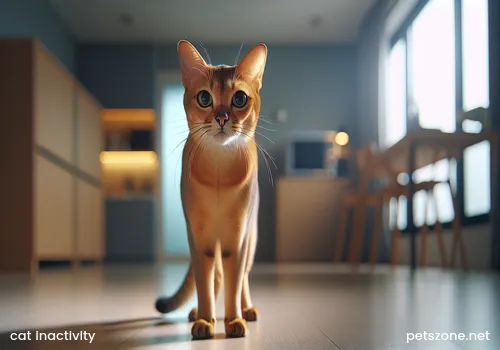
Cat Suddenly Becomes Inactive_Health Issues and Recovery Methods
Cats suddenly becoming inactive may signal health alarms, environmental stress, or emotional issues; if vomiting, diarrhea, or persistent loss of appetite occur, medical attention is necessary; most cases can improve through observation, environmental adjustments, and increased interaction.
1. Key Points First: When Must You See a Vet Immediately?
Cat owners fear encountering a “sudden change in their cat” — yesterday it was jumping around and knocking over cups, today it lies limp in the cat bed like a blanket. Don’t panic, but learn to quickly identify danger signals:
If besides inactivity, the cat also exhibits vomiting (especially frequent vomiting), diarrhea (loose stool with blood or persistent soft stool), complete loss of appetite (not eating or drinking for over 24 hours), rapid breathing (normal breathing rate is 20-30 breaths/min, over 40 is critical), increased or cloudy eye discharge, instability while walking, or even seizures, these are the body’s “red alert” signs.
A real case: a friend’s Ragdoll cat suddenly shrank into a corner and didn’t resist when touched; initially thought it was just adapting to new cat litter. The next day, the cat had pale gums and urinated outside the litter box. A hospital check revealed acute nephritis — two days later could have resulted in kidney failure. So remember: the more abnormal symptoms, the higher the priority to rule out illness.
2. Common Causes of Inactivity: A Stepwise Check from Physiology to Psychology
After excluding emergency diseases, causes can be analyzed stepwise as “physiological discomfort - environmental stress - psychological emotions.”
1. Physiological Discomfort: Small Pains and Itching Can Make Cats “Give Up”
Cats are natural “masters of hiding pain”; their wild ancestors’ survival instinct has accustomed them to masking discomfort, so minor issues can suddenly show as inactivity.
- Oral Problems: tartar, oral ulcers, teething (kittens) cause eating pain, making cats lethargic. Watch if the cat licks its mouth more often or suddenly spits out dry food.
- Joint Discomfort: cats over 5 years old may develop degenerative arthritis, especially overweight or purebred cats (like British Shorthair). If it curls up when you touch its back or legs and becomes clumsy jumping onto the sofa, it might have joint pain.
- Anemia: anemic cats appear weak, with pale gums and inner eyelids, and show more breathing difficulties after activity. Common causes include parasites (like blood-sucking fleas), nutritional deficiencies (such as long-term low-quality food causing iron and B12 shortages).
2. Environmental Stress: Cats Are More Sensitive to "Changes" Than You Think
My cat hid inside a cardboard box for three days during its first move, only venturing into a corner of the living room on the fourth day, ignoring even the cat teaser — this is typical “environmental stress.”
Cats’ sense of security is based on familiar smells, spatial structure, and daily routines. Moving, new furniture, renovation noise, new pets/babies at home, owner business trips reducing companionship may all put the cat into “defense mode.” This inactivity actually means the cat is saying: “I need time to re-mark territory and confirm safety here.”
3. Psychological Emotions: Cats Can Get “Emo” Too
Don’t think only humans get depressed; cats’ emotional problems deserve attention too.
- Lonely-type emo: cats left alone for long periods (e.g., owner works 9-to-9 with only one day off, no other pets) may “give up” due to lack of stimulation. The most common case I’ve seen was a Ragdoll whose owner switched to a demanding 996 schedule; the cat went from two-hour daily active playtime to sleeping all day on the window sill, barely sniffing its favorite freeze-dried treats.
- Stress from Competition: in multi-cat homes, if a cat is bullied (e.g., food snatching or litter box takeover), it can become timid. Watch for hissing or chasing behavior; weaker cats might reduce activity to avoid conflicts.
3. Diet and Inactivity: Eating Wrong Can Really Make Cats “Lack Energy”
Many think “cats are inactive because they’re lazy,” but diet problems are often the hidden cause.
- Nutritional Deficiency: long-term feeding of single-type food (especially cheap brands) may cause vitamin (like B complex) and trace element (like taurine) shortages. Taurine deficiency affects heart muscle function, causing weakness; B complex shortage leads to neurological problems, showing as lethargy.
- Overeating or Eating Too Full: don’t laugh! Some cats get overfed because owners “fear they are hungry,” especially kittens. After overeating, cats become lethargic but usually recover after 2-3 hours; if lethargy lasts half a day or more, it may be indigestion (check if the belly feels bloated or hard).
- Food Unpalatability: cats are “picky gourmets”; sudden food changes or spoiled food (e.g., old canned food) cause loss of appetite, leading to lack of energy. My cat once drank only a little water for two days after I bought near-expiry canned food; after switching back to usual food on the third day, it revived.
4. How to Help Cats Regain Vitality? Tailored Solutions by Situation
Once the cause is identified, fixing it becomes much simpler.
Situation 1: Health Issues (Must See a Vet)
If a disease is suspected (such as vomiting or diarrhea mentioned earlier), do not medicate on your own! Cats’ liver metabolism is much weaker than humans’, ordinary cold medicines (e.g., acetaminophen) can be fatal. Take the cat directly to the hospital for blood routine and biochemical tests, and if necessary, X-rays or ultrasounds. For example, anemia requires parasite checks (fecal tests); kidney disease needs creatinine and urea nitrogen level checks.
Situation 2: Environmental Stress / Psychological Emotions
- Allow an "adaptation period": After moving or new members arrive, give the cat a “safe house” (like a separate room with old blankets and familiar toys) to explore the new environment slowly. Don’t forcibly take it out to “socialize”; the more forced, the more stressed it gets.
- Increase "life stimulation": Lonely cats need more interaction—at least 15 minutes daily with a cat teaser simulating hunting (laser pointers can cause anxiety, use cautiously), or give catnip toys and treat-dispensing balls (filled with freeze-dried treats). Multi-cat homes should have more cat trees, feeding bowls, and litter boxes (number = cats +1) to reduce resource conflicts.
- “Emotional soothing” tips: Pheromone sprays (imitating cat pheromones) effectively relieve stress; playing “cat relaxation music” (studies show music frequencies close to purring relax cats); wrapping cat beds with old clothes adds familiar scents.
Situation 3: Dietary Adjustment
- Check if cat food is expired and appropriate for current age (kitten/adult/senior formulas differ).
- Anemic cats can be fed chicken liver (cooked, 1-2 times a week, not excessively), beef (rich in iron and protein), or use blood supplements as prescribed by a vet.
- Cats with indigestion should temporarily eat soft food (canned food, softened dry food) combined with pet probiotics (such as Bradyrhizobium yeast) to regulate the gut.
Finally, a blunt truth: A Cat’s "Inactivity" Is Its Way of "Talking"
Cats don’t speak languages, but every behavior is a signal. Sudden quietness may be telling you “I need help,” or “I’m a bit upset lately.” As cat owners, what we need to do is not to panic but calmly observe and scientifically diagnose—after all, when one day it suddenly jumps onto your desk and scatters your freshly written paper everywhere, you’ll know: that lively little rascal has finally come back.

-560x560.webp)