

Can Tabby Cats Understand Human Speech_Intelligence Training and Interaction Guide
Friends who raise tabby cats have probably experienced these “chilling upon reflection” moments: you’re crouching in the kitchen unwrapping a cat treat, and before you call it, it’s already sprinting from the living room; you pretend to be angry saying, “No treats if you knock over the water cup again,” and its ears droop, quietly retracting its paws; some netizens’ tabby cats even jump onto calculators to press “6” when hearing their owners say bad things— is this just coincidence, or do they really understand?
Regarding tabby cats' intelligence and “human-like understanding,” I combined real cases from the cat-raising community, animal behavior research, and experiences from friends who have raised tabbies for ten years. Today, let’s talk about the hidden skills of this “Chinese Divine Cat.”
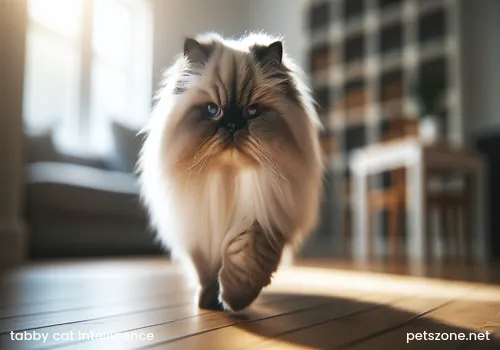
1. Can Tabby Cats "Understand Human Speech"? The Subtle Balance between Science and Reality
First, clarify a misconception: Tabby cats cannot understand the abstract meaning of language like humans, but they are “context masters” and “emotion detectives.”
Animal behaviorists have conducted experiments: when owners say “time to eat” in a gentle tone, cats respond quickly; but if the same tone is used to say “time for a bath today,” cats become alert—this shows they remember not the words themselves but the association between “specific tone + subsequent events.” Like when we hear “ding dong” and think of food delivery, cats hear the tone of “eating” and know there are meat snacks.
What makes tabby cats special is their keener sensitivity to “context” compared to ordinary cats. A friend’s tabby “Afu” once stole some eggs, after licking the yolk clean, it dragged the eggshell bag to the trash bin and even scratched the lid over it—this is hardly a simple conditioned reflex. It’s clearly a logic chain of “knowing the owner will be angry, so covering up evidence.” Even more amazing, once my friend jokingly said “Afu is a pig,” it immediately jumped onto the coffee table and pressed the “6” key on the calculator (probably pressed it before and found the sound attracted attention). It seemed like it was saying “you’re the pig.”
This ability of "drawing inferences from one instance" actually shows high intelligence. Research from Azabu University in Japan shows that cats’ short-term memory lasts for 16 hours (dogs’ only 5 minutes), and tabby cats, as a breed domesticated locally for thousands of years, have even more outstanding memory and associative abilities. They remember their owner's footsteps, speech rhythms, and even predict your actions through daily patterns like “you touch your phone → going out” or “you unwrap packages → maybe there’s a new toy.”
2. What is the Intelligence Level of Tabby Cats in the Cat World?
If we list cat intelligence rankings, tabby cats definitely rank in the top three. Based on online observations and behavioral indicators, their intelligence mainly shows in these dimensions:
1. Recognition Ability: Clearly Knowing Who Is Good to Me
Ordinary cats may act affectionate to everyone at home, but tabby cats are “selectively clingy.” My neighbor has three cats, among which the tabby “Orange” only recognizes the female owner— it eats when fed by the male owner but dodges when touched on the head; if the female owner works late, it waits at the door and even brings its favorite toy over for “comfort.” Animal behaviorists explain this is because tabby cats’ “social cognition” is more mature, able to distinguish between the “food provider” and the “emotional connection person.”
2. Preparing for the Future: The "Survival Master" of Cats
Many tabby cats have a habit of “stockpiling food.” My friend’s Afu always leaves some kibble in the bowl to eat slowly after the owner leaves; another netizen’s tabby secretly buries freeze-dried treats in the sofa gap, later digging them out in winter as “reserve food.” This behavior is a typical “food caching” instinct in the wild, but such preservation in domestic cats shows their “future planning” ability is stronger than ordinary pets.
3. Learning Speed: The “Class Representative” in Command Training
I know a cat trainer who says tabby cats are the “most worry-free students.” Ordinary cats may need 20 repetitions to learn “high five,” tabbies can master it in 10; learning to open doors (yes, many tabbies can open bedroom doors) only requires watching the owner twist the doorknob 3-5 times. The key is their ability to “generalize” skills— for example, after learning to press elevator buttons with their paws, they also investigate package locker buttons, as if saying “I know this one too.”
3. Want to Train Your Tabby Cat? Capture These 3 "Smart Cat Switches"
Since tabby cats have smart intelligence, training is naturally more efficient, but pay attention to the method—they don’t like being forced, and you need to go with the flow.
1. Use “Food Rewards” as a Door Opener, but Don’t Be Too Obvious
Tabby cats are more interested in treats than many other breeds (after all, they have hunting instincts), but they dislike “mechanical repetition.” Trainers suggest using small freeze-dried pellets during training, rewarding 1-2 pieces for each success, combined with praise like “great job.” But note: if they turn away after doing something right, it means the treat’s appeal isn’t enough; switch to their favorite food (e.g., chicken over fish).
2. Utilize Their Talent for “Observational Learning”
Tabby cats are the “learn after one look” type. To teach them to use a scratching board, you can touch it in front of them and say “scratch here”; to stop them from jumping on the dining table, you can pretend to jump up yourself, then show a painful expression saying “ouch”—they will imitate your actions and even understand the cause-effect of “jumping on table = owner unhappy.”
3. Turn Training into a “Game”
Avoid “classroom-style” training which tabbies find boring. For example, teaching “come here,” you can crouch playing with a teaser wand, call its name, and reward when it runs over; teaching “sit,” use treats to guide it to look up naturally causing it to sit. The key is to keep sessions under 5 minutes to maintain freshness.
4. Tabby Cats’ “Interaction Code”: Cold Outside, Warm Inside — The “Chinese-style Romance”
Many people think tabby cats are “aloof,” but actually their way of interacting is more “subtle.” Those who have raised them understand their love hides in details:
- Welcoming Ritual: When you open the door, it may not immediately pounce, but after you put on shoes, you’ll find it sitting in the corner of the foyer, its tail tip gently swaying—this is the secret code for “I’ve been waiting for you for a long time.”
- Emotion Observer: When you’re exhausted on the sofa after working late, it won’t make noise but quietly curl up by your feet; when you laugh out loud, it suddenly brings a toy as if saying “look, I’m playing with you.”
- Territorial Security: Tabby cats care a lot about “their home.” When strangers come, they hide to observe first, but once guests leave, they rub against your feet— as if claiming “I just protected you.”
5. New to Raising Tabby Cats? This Might Be the “Optimal Solution”
Finally, the most concerning question for beginners: are tabby cats easy to raise? The answer is: perfectly suitable.
- Strong and Hardy: As a native cat, tabbies are almost the “cockroach of the cat world.” They rarely have genetic diseases (like heart disease in Ragdolls or cartilage issues in Scottish Folds), their digestive system is robust and not picky—whether you feed them kibble or cooked chicken breast, they’re happy, and rarely have soft stools.
- Strong Adaptability: Moving house or guests coming over, tabbies might hide for two days but quickly adjust. My friend once drove Afu to another city; Afu dared to sleep on the hotel bed the same day, much less stressed than many other breeds.
- Low Maintenance and Cost-effective: Short hair means no daily brushing needed (twice weekly during shedding suffices), no regular grooming; their intelligence means fewer toys needed—a cardboard box and teaser wand entertain them all day— for beginners, isn’t this a “low investment high return” pet?
Of course, tabbies have minor downsides: for example, too smart may lead to “destroying the house” (like opening drawers to rummage for snacks), strong curiosity may cause trouble (like knocking over vases). But these small problems pale compared to the advantages of “recognizing their owner, understanding interaction, and easy to raise.”
Having raised a tabby for five years, my deepest feeling is: it’s not a “pet,” more like a “slightly tsundere family member.” It may not fully understand your words, but it cares deeply about your emotions; it doesn’t speak sweet words, but expresses “I’m here” through actions.
So, if you’re hesitating on which cat to raise, why not give this “Chinese Divine Cat” a chance—after all, living with a smart, food-stashing little buddy who presses the calculator to “talk back” can only make life more interesting.
-560x560.webp)