

Can a 35-day-old Kitten Eat Kitten Food_All-round Analysis of Kitten Feeding Precautions
A 35-day-old kitten, approximately 5 weeks old, can usually start trying kitten food, but the food at this stage needs special preparation. It is not recommended to feed hard dry kibble directly. Typically, kittens show interest in solid food around 3-4 weeks old, entering the weaning period. Around 35 days old, they are at a crucial stage transitioning from complete reliance on mother’s milk or milk replacer to solid food, requiring patient guidance and appropriate food preparation from the owner.
At this stage, the kitten’s digestive system is not yet fully mature, and their teeth are still erupting, so it is essential to provide food that is easy to digest and chew. Generally, you can choose kitten-specific wet food (such as mousse texture) or soak dry kitten kibble in warm water or kitten milk replacer until it becomes paste-like or porridge-like, making it easier for kittens to lick and digest. As kittens gradually adapt, you can slowly reduce the moisture and increase the consistency of the food until they fully transition to a combination of dry and wet food or pure dry food.
The Golden Rule of Kitten Feeding: Step-by-step Progression and Fine Management
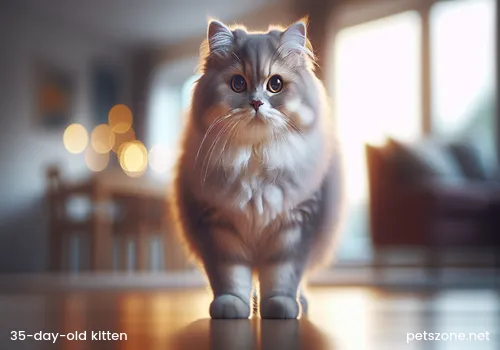
Kittens grow rapidly, from being helpless newborns to lively and active cats, with nutritional needs changing constantly like "Transformers." Scientific and reasonable feeding is the cornerstone of their healthy growth.
1. The “Weaning” of 35-day-old Kittens in Progress
A 35-day-old kitten is in the weaning period, an important stage transitioning from liquid to solid food. Just like human babies shift from breast milk to complementary foods, a kitten’s digestive system needs time to adjust to new food types.
1. Prepare Suitable Food:
* Kitten Wet Food (Main Cans): Choose wet food specially designed for kittens, especially those with soft mousse or meat puree textures. These foods have high moisture content, are easy to digest, and contain the rich protein and nutrients needed by kittens. Many brands offer special kitten main food cans.
* Soaked Dry Kitten Kibble: If choosing dry food, be sure to soak it in warm water or kitten milk replacer until it becomes paste-like or porridge-like. The water temperature is recommended around 38 degrees Celsius to mimic mother’s milk temperature. Never use cow’s milk, as most cats are lactose intolerant and drinking cow’s milk can cause diarrhea.
* Meat Puree (Supplementary): Small amounts of unsalted, unseasoned boiled chicken or fish puree can be given occasionally as a supplement to enhance palatability, but should not be the main food to avoid nutritional imbalance.
2. Feeding Methods and Frequency:
* Small Frequent Meals: A 35-day-old kitten has a small stomach capacity and fast digestion, so it is recommended to feed 4-5 times a day, with small but balanced amounts each time to ensure a steady energy supply.
* Induce Trying: At the beginning, you can smear the food on the edge of the kitten’s mouth or fingertip to let them lick it, or place it on a shallow dish to guide them. Some kittens may be cautious and require patient guidance.
* Observe and Adjust: Closely observe the kitten’s eating and bowel movements. If soft stools or diarrhea occur, you may need to reduce the amount of solid food or soak the food more thoroughly.
3. Warm Tips: Weaning is a process that takes 3-10 days or even longer, and each kitten adapts at a different pace. During this period, if the kitten still needs milk, continue to provide kitten milk replacer until they are fully adapted to solid foods.
2. Comprehensive Analysis of Kitten Feeding Precautions
Besides the special needs during weaning, there are many “tricks” to feeding kittens throughout the entire kitten stage. Cat owners should sharpen their eyes and learn!
1. Balanced Nutrition is the "King’s Way":
Kittens are in a rapid growth phase, requiring energy and nutrients 2-3 times more than adult cats. They need high-protein, high-fat food to support the development of bones, muscles, and organs, as well as sufficient vitamins, minerals, and essential nutrients such as taurine.
* Choose Professional Kitten Food: Be sure to select cat food labeled “Kitten Formula” and “Balanced Nutrition” (meets AAFCO standards). Professional kitten food is specially formulated according to the growth needs of kittens.
* Avoid Frequent Food Switching: Kittens’ intestines are fragile, and frequent food changes may cause gastrointestinal discomfort or even diarrhea. If changing food is necessary, use a "seven-day food switching method" by gradually increasing the proportion of the new food while decreasing the old food, allowing the stomach to adapt slowly.
2. Water Intake is Essential:
Regardless of feeding wet or dry food, fresh and clean drinking water must always be available. Kittens are prone to dehydration, especially when fed primarily dry food. Adequate water helps maintain kidney health and prevent urinary system issues. Prepare a shallow water bowl and change the water daily; in hot weather, change it more often to prevent bacterial growth.
3. Avoid “Minefields” of Food:
* Cow’s Milk: As mentioned earlier, most cats are lactose intolerant. Cow’s milk can cause diarrhea, bloating, and other problems. Goat milk powder can be used as a substitute.
* Human Foods and Seasonings: Avoid feeding cats any foods containing human seasonings, especially onions and garlic (including onion powder and garlic powder), chocolate, coffee, grapes, raisins, and other foods toxic to cats.
* Raw Meat: Although cats are carnivores, raw meat may contain bacteria or parasites, posing risks to kittens’ immature immune systems. If feeding raw meat, it must be thoroughly frozen or cooked, and veterinary advice should be sought to ensure balanced nutrition.
* Dog Food: Dog food’s nutritional formula differs from cat food and lacks essential nutrients like taurine. Long-term feeding can cause malnutrition in cats.
4. Monitor Weight and Health:
Regularly weighing kittens is a key indicator of whether they are growing healthily. Healthy kittens usually gain about 10-15 grams (0.25-0.5 ounces) daily. If weight gain stalls or declines, or if symptoms like lethargy, poor appetite, vomiting, or diarrhea appear, contact a veterinarian promptly.
5. Cultivate Feeding Habits:
* Fixed Feeding Location: Set up a quiet, comfortable feeding area at home to help kittens develop good eating habits.
* Avoid “Picky Eating”: During kittenhood, try different flavors and textures of kitten food, but do not switch brands frequently to prevent the development of picky eating habits. Avoid feeding too many snacks or too early to prevent affecting main food intake.
* Clean Utensils: Wash food bowls after each feeding to maintain hygiene and prevent bacterial growth.
Frequently Asked Questions
Q1: My 35-day-old kitten refuses to eat soaked kitten food; what should I do?
A1: Kittens may initially resist solid food. Try smearing a small amount of soaked kibble on their mouth or finger, or place it directly in a shallow dish. Ensure food temperature is moderate (close to body temperature); too cold or hot can reduce appetite. If still refusing, mix kitten milk powder with kibble and gradually reduce the milk powder proportion. Patience is key—do not force feed, and continue offering kitten milk replacer to ensure nutrition.
Q2: How long before a kitten can be fully weaned and eat dry food independently?
A2: Kittens can usually be fully weaned and begin eating dry or wet kitten food independently at 6-8 weeks old. However, there is still a transition period from full weaning to eating dry food. During this stage, gradually reduce the water content in soaked dry kibble so the kitten adapts to harder textures, while providing sufficient water.
Q3: Can kittens drink pet store “pet milk”?
A3: Some "pet milk" products are marketed as designed for cats. However, to be safe, it is recommended to choose kitten-specific milk powder or goat milk powder. Even “pet milk” may contain ingredients that are hard for kittens to digest. Remember, mother’s milk or professional kitten milk replacer is the best dairy choice for kittens.
Q4: Is it a problem if my kitten’s stools are very soft?
A4: Soft stools are common during weaning or food changes, reflecting the digestive system’s adjustment. First check if inappropriate foods (e.g., cow’s milk, human food) were fed, or if food was changed suddenly. For mild soft stool, try soaking food more or revert to easier-to-digest foods temporarily. If soft stools persist with lethargy, reduced appetite, or other symptoms, seek veterinary care immediately.
Q5: Do kittens need snacks?
A5: The main focus for kittens is solid food ensuring comprehensive balanced nutrition. Snacks are generally not recommended as a main food source because they may cause nutritional imbalance. If giving snacks, choose low-calorie, natural, additive-free snacks designed for kittens and keep the amount under 10% of daily total calories. For example, a small amount of cooked pure chicken breast can be an occasional reward.
Conclusion
Caring for a 35-day-old kitten is like looking after a curious little “fur baby,” requiring both detailed patience and scientific rigor. From careful “weaning” transition to comprehensive balanced nutrition and daily attentive care, every step embodies the owner’s love and responsibility. We hope this detailed kitten feeding guide helps you and your kitten start a healthy and happy “cat life” journey together, allowing them to grow strong and become the “heartwarming little master” of your home.
References:
* Purina US. How Much to Feed a Kitten: A Kitten Feeding Chart by Age.
* PetMD. Weaning Kittens: When and How To Introduce Solid Food.
* Humane Society of Charlotte. Kittens 5 Weeks and Older - Feeding & Care: A Guide.
* The Spruce Pets. 4 Week Old Kitten Feeding Schedule: From Birth to Eight Weeks.
* Kitten Lady. Weaning Kittens.
* PetPetIn. From Newborn to Adult Cat: Complete Guide to Kitten Feeding.
* Good Owner. What to Feed Kittens After Weaning.
* Purina US. Understanding When to Wean Kittens.
* Royal Pet Food. Nutritional Requirements of Kittens.
* Quora. What foods can I give a one-month-old cat?
* Purina. When to Switch From Kitten Food To Cat Food.
* NexGard SPECTRA. Kitten Feeding Guide.
* Best Friends Animal Society. Weaning Kitten Care Four to Eight Weeks Old.
* Douban. How to Wean Kittens.
* Cats Protection. Kitten care | advice on kittens and newborns.
* SANIMED. Kitten growth and development.
* Good Owner Pet Food. Cat Feeding Guide.
* Koret Shelter Medicine Program. Caring for Kittens from Birth to Eight Weeks.
* March Newsletter: How and When to Introduce Solid Food to Your Kitten.
* Kitten Guide: Five Weeks.
* PetMD. Feeding Kittens 101: How Much To Feed Kittens, How Often, and More.
* Royal Canin. Kitten feeding guide by development stage.
* Spayed Kitten KITTY.
* Royal Canin. Kitten feeding guide by development stage.
* NetEase Pets. Dietary Differences for Cats of Different Ages.
* Feeding After Kitten Weaning.
* Petio. [Veterinarian Supervised] Explanation of Kitten Feeding Methods and Food Selection.
* ADVANCE. How to Feed Newly Weaned Kittens.
* Pets. What Kittens Eat.
* Wangmiao Planet. Kitten Care Guide.
* Reddit. What do I feed one-month kittens?
* RSPCA Knowledgebase. What should I feed my kitten?
* What’s Worth Buying. At What Age Can Kittens Eat Cat Food? 99% of Cat Owners Are Wrong!
* MaoHaoDuo. Comprehensive Guide and Precautions for Feeding 0-1 Year Old Kittens.
* OneDegree HK. Can Kittens Be Left Alone at Home? Starting from Age Calculation, Complete Kitten Care Guide!
* Cat Owner’s Handbook. What Kind of Cat Food Should I Prepare?
* Lianxin Pets. What to Feed Kittens? 5 Principles to Choose Kitten Food and 3 Key Points of Kitten Diet.
* YouTube. What to FEED a MONTH-OLD KITTEN? (Feeding a Baby Cat).
* What to Feed Kittens? Dry Food or Canned Food, Explanation of Each Stage!

-1-560x560.webp)